H01113 / D00MSCR0LL
Hollie Leggett
temporary tattoos, silk, html/css, javascript, generative adversarial network trained on 600 selfies and diary entries, 8th Wall, augmented reality, CRT monitors
2023
H01113 and D00MSCR0LL form a connected system that explores how AI reconstructs intimacy, identity, and the body. H01113 presents a distorted AI portrait trained exclusively on 600 selfies I captured of myself, paired with a sheer fabric print of my body covered in QR-code tattoos. D00MSCR0LL activates these same tattoos through performance: audience members apply the codes to their own bodies, gaining access to evolving AI-generated diary entries, trained exclusively on a document of my own diary writing, that mutate each time they press their fingers together.
Together, the installation and performance trace how personal data circulates, replicates, and escapes its source, moving from a single body into a collective one.
H01113 — Installation
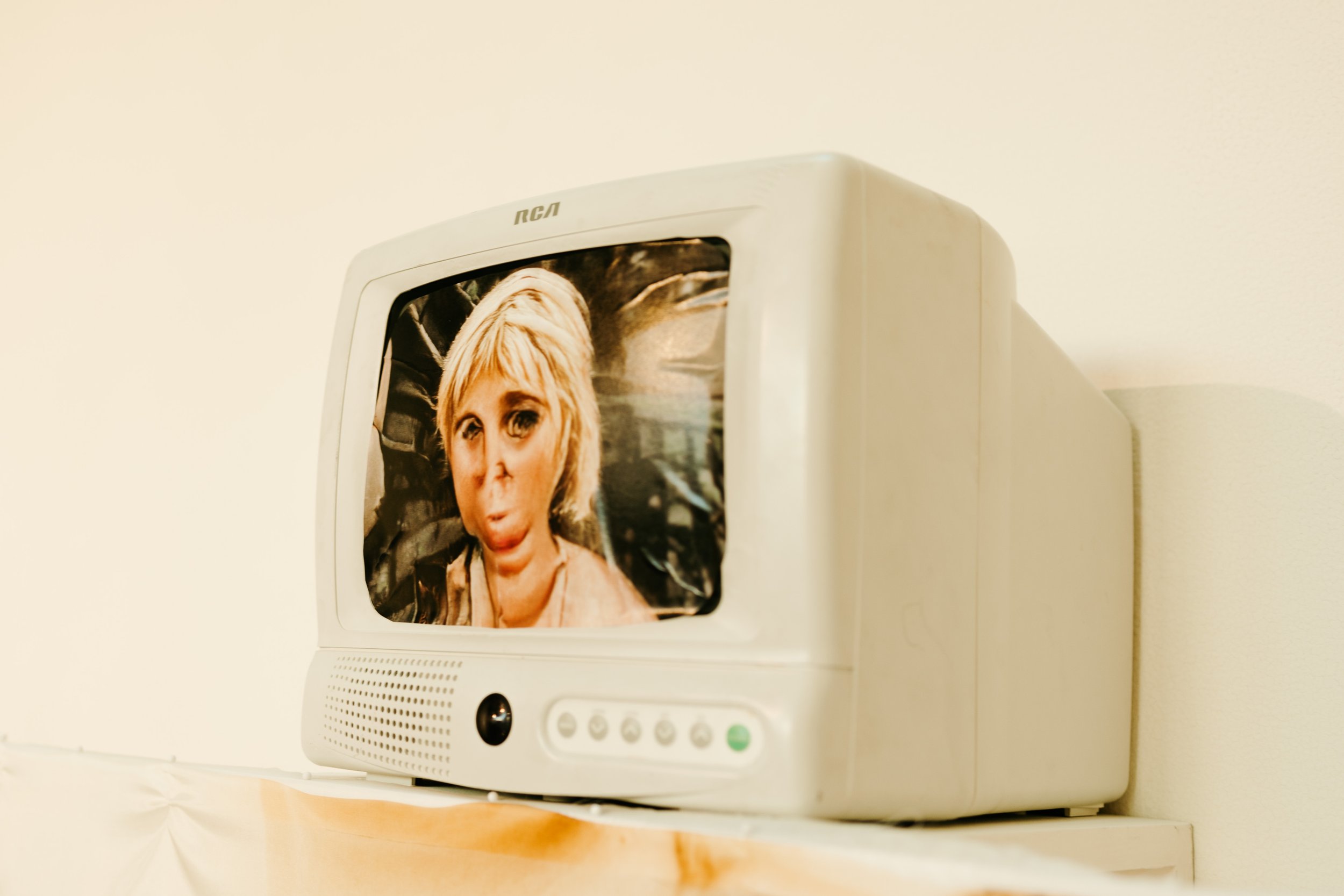
H01113 is an installation built from a failed AI reconstruction of my face, generated using a model trained exclusively on 600 selfies I captured of myself. The distorted output, printed as a sticker and placed over the screen of a broken CRT monitor, becomes a portrait defined entirely by the limits of my own dataset. The CRT functions as a quiet critique of deepfakes and the ease with which distorted images gain authority simply by appearing on a display meant to be trusted.
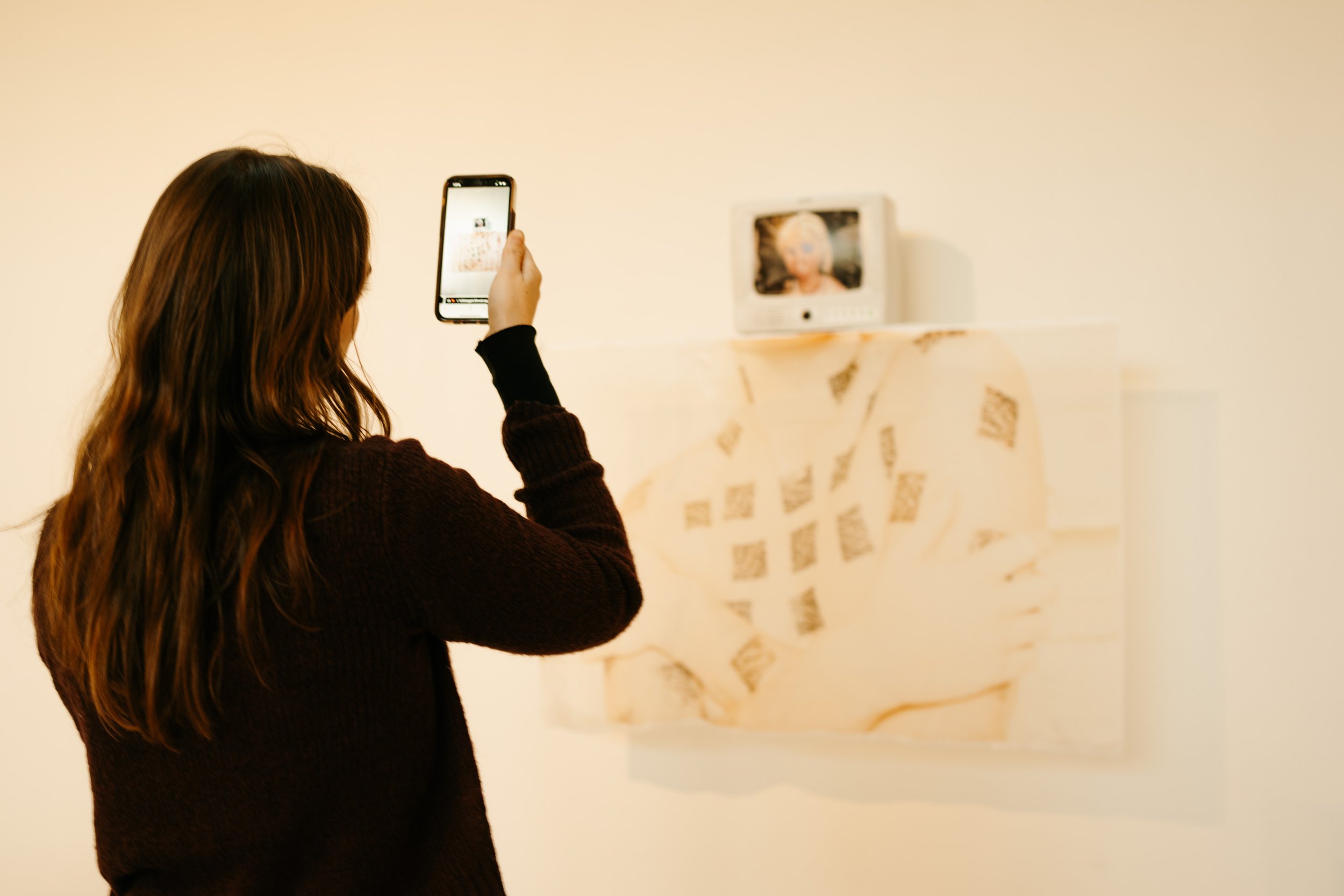
Beneath it hangs a sheer silk print of my torso covered in QR-code temporary tattoos. The transparency of the silk suggests both exposure and permeability, implying that if you look closely enough you can see through not only the material, but also the systems that construct these digital versions of the self.
When scanned, the tattoos activate an AR layer of AI-generated diary entries, written from a document of personal writing I provided. These overlays project synthetic intimacy onto the surface of my skin, revealing how machines can imitate emotional tone without ever accessing its lived origin. A second CRT loops a video of me applying the tattoos to my chest, marking the moment when the body becomes prepared for machine interpretation.
The installation examines how AI systems reshape identity, amplifying certain details, erasing others, and producing versions of the self that feel recognizable yet fundamentally wrong.
Materials
temporary tattoos
silk print
CRT monitors
generative adversarial network (trained solely on 600 selfies)
8th Wall AR
html/css/javascript
video loop
Materials
The AI portrait was generated using a private model trained only on my own images, ensuring all distortions were the result of the system’s internal assumptions rather than a general dataset. The diary entries began as a document of my personal writing, which I fed back into an AI system to produce recursive versions of my voice. The CRTs, fabric, and tattoos were chosen for their tension between analog materiality and digital reconstruction.
Visitors scan the QR tattoos printed on the fabric panel to reveal AR overlays on their phones. The entries attach directly to the image of my body, creating a layered experience where physical presence, digital reconstruction, and synthetic autobiography overlap.
Interaction

D00MSCR0LL — Performance
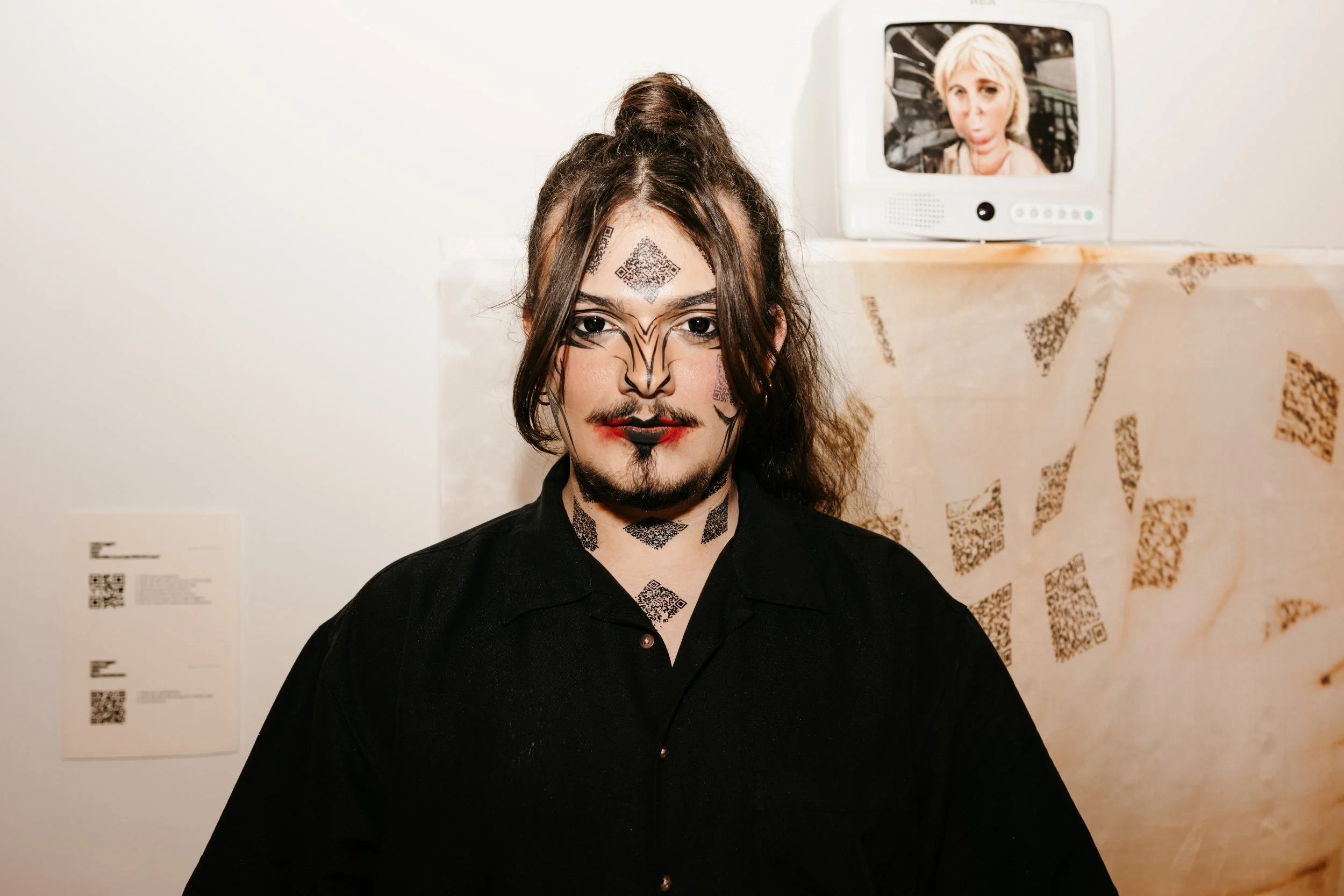
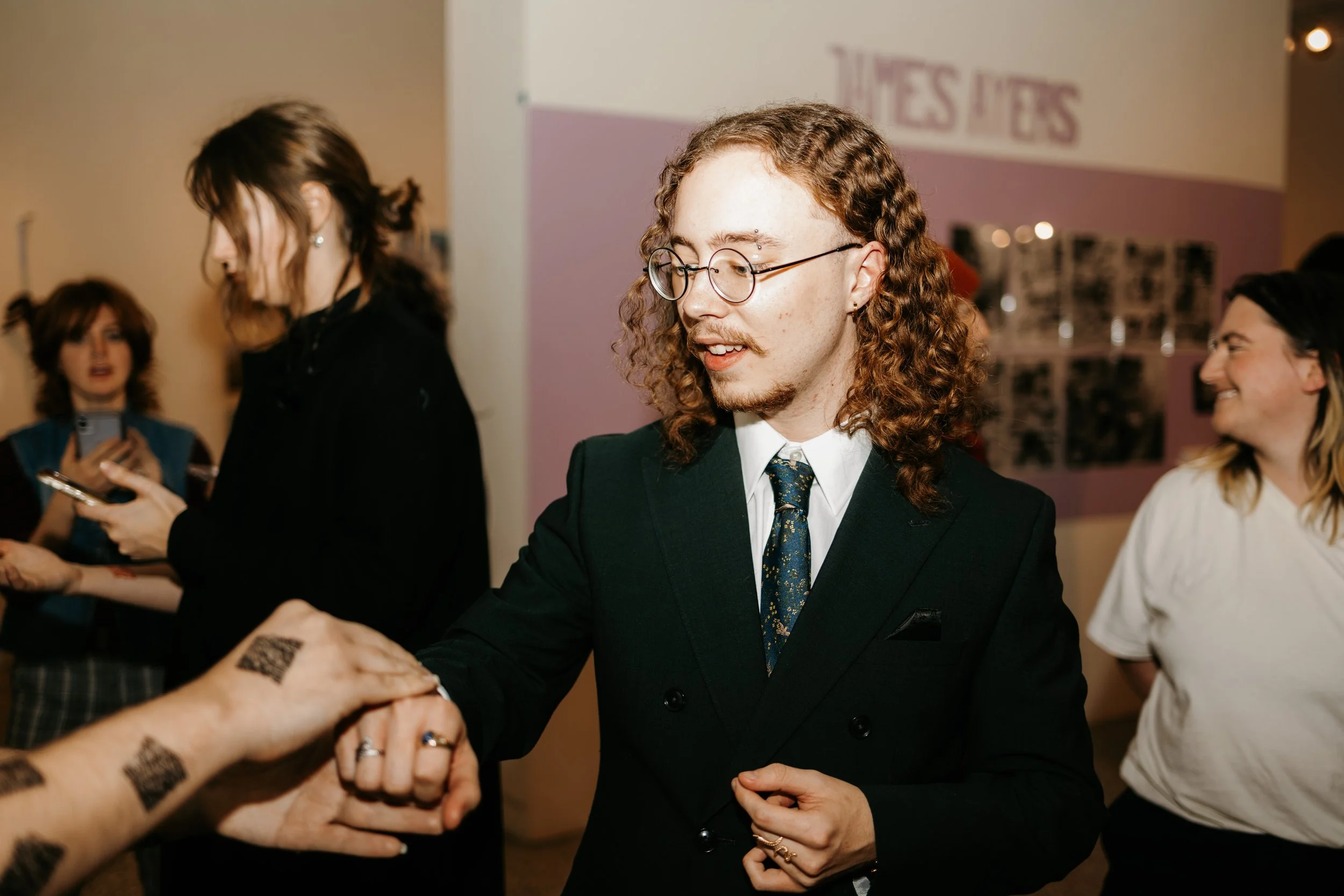
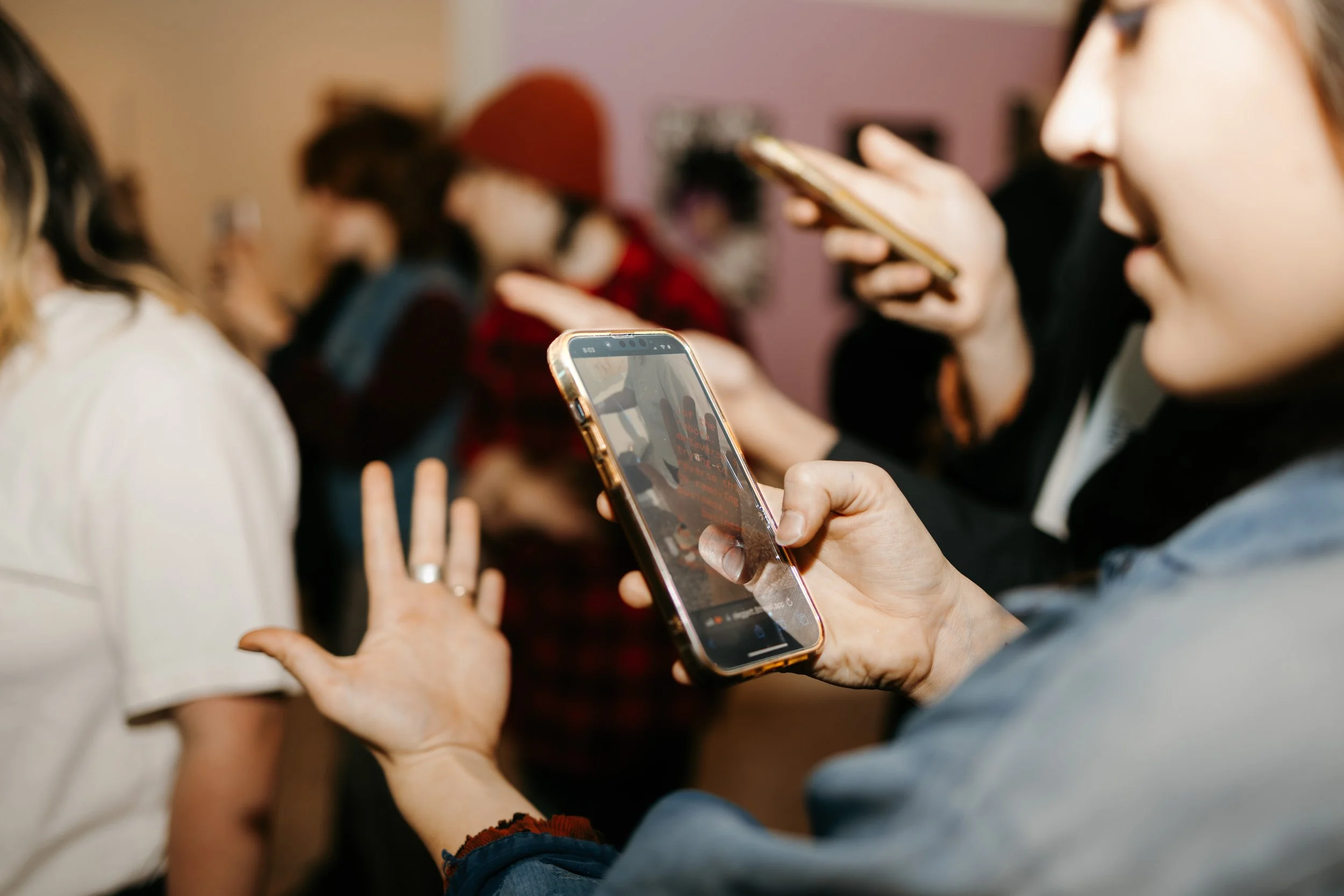
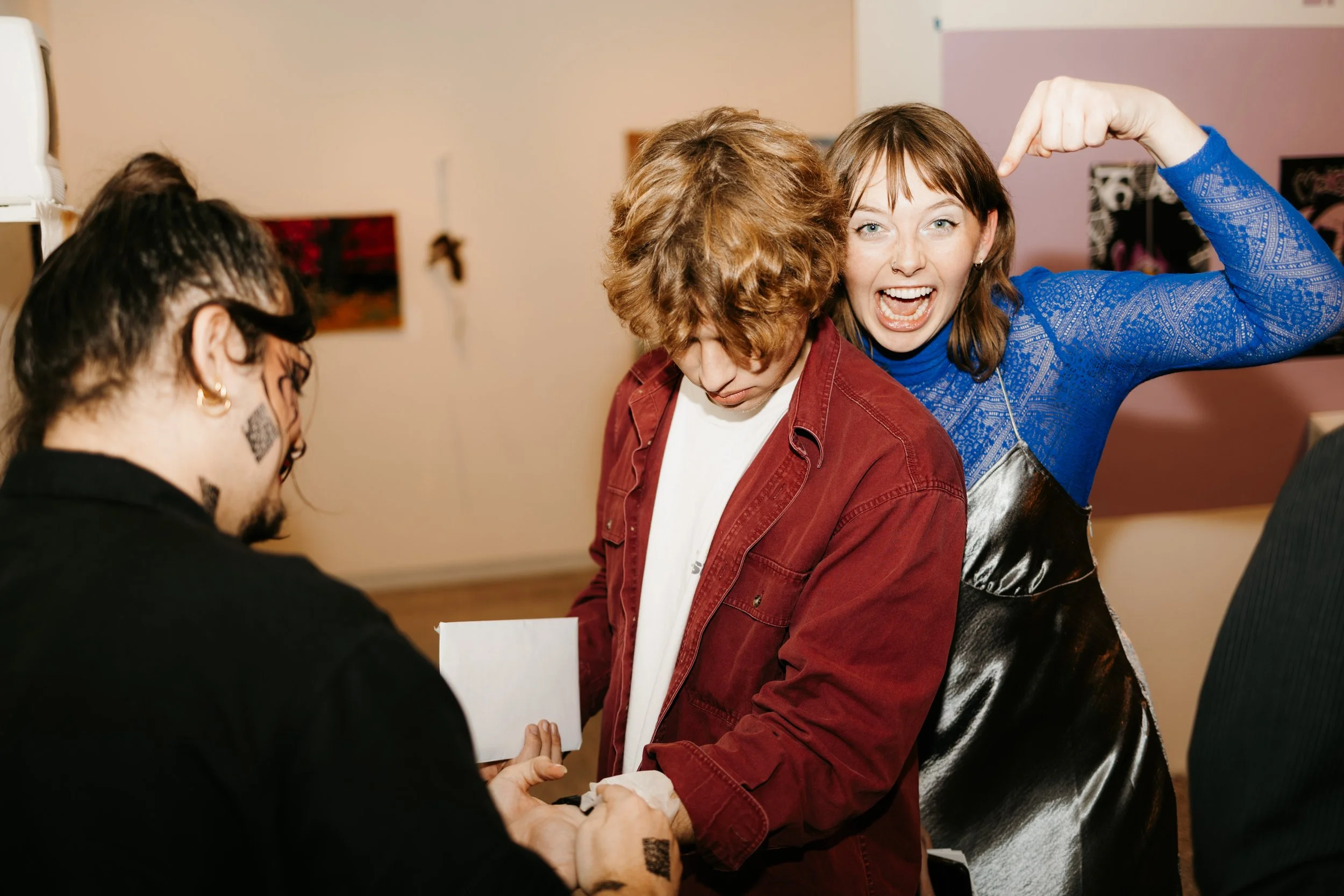
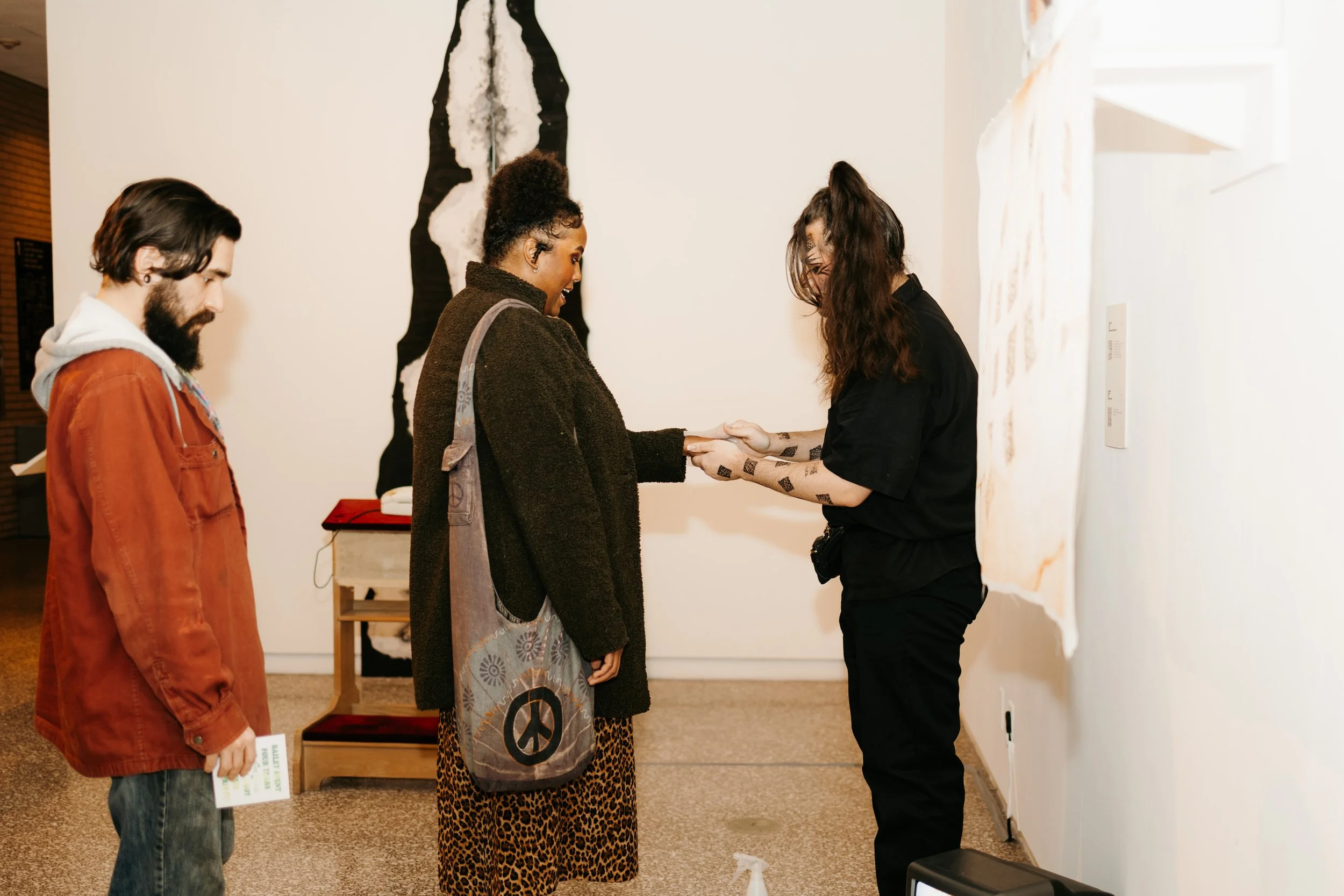
D00MSCR0LL is the participatory performance that activates the system introduced in H01113. Audience members are invited to apply the same QR-code tattoos tattoos that appear on the fabric print in H01113, onto their own bodies. Scanning these codes grants them access to the evolving AR diary system, entries that appear, shift, and regenerate through a simple gesture of pressing their fingers together. Each gesture generates a new AI-written version of the diary, gradually drifting further from the original emotional source material.
By distributing the tattoos across many people, the performance turns the audience into a living interface. Personal data that originated from my body and writing is now carried, triggered, and reshaped across multiple individuals. The system becomes social, recursive, and unstable, mirroring the endless reproduction and mutation of content online.
D00MSCR0LL examines how personal data moves once released into a network, how identity becomes shared, editable, and endlessly reprocessed through technological systems.
Materials
QR-code temporary tattoos
gesture-triggered AR system
mobile phones as display interface
shared diary dataset
Materials
Each tattoo is linked to a unique AR entry point. When viewed through the app, the AI diary appears on the viewer’s phone. Finger-press gestures activate the regeneration system, producing new variations of the text. The tattoo functions as both a physical mark and a digital access key.
Participation is central. Viewers choose where to place the tattoos, how many to apply, and how often to trigger new diary entries. Their bodies become sites of transmission, carrying pieces of my data that mutate with each interaction. The work transforms spectators into collaborators within the system’s feedback loop.
Interaction

Interrelation of Installation and Performance
H01113 establishes the system’s architecture: a machine-made portrait, a mediated body, and an AI diary rooted in personal writing. D00MSCR0LL extends this system outward, distributing the same tattoos and diary logic across many bodies. Where H01113 focuses on the machine’s attempt to reconstruct a single identity, D00MSCR0LL shows how that reconstruction begins to circulate and mutate as it is carried across multiple bodies. Together, they explore how data derived from one person moves through technological, social, and embodied networks, reshaping identity in the process.